One route, about a mile and a half, and the essentials of the medina. It is the walk we recommend for your first day.
A route you cannot lose
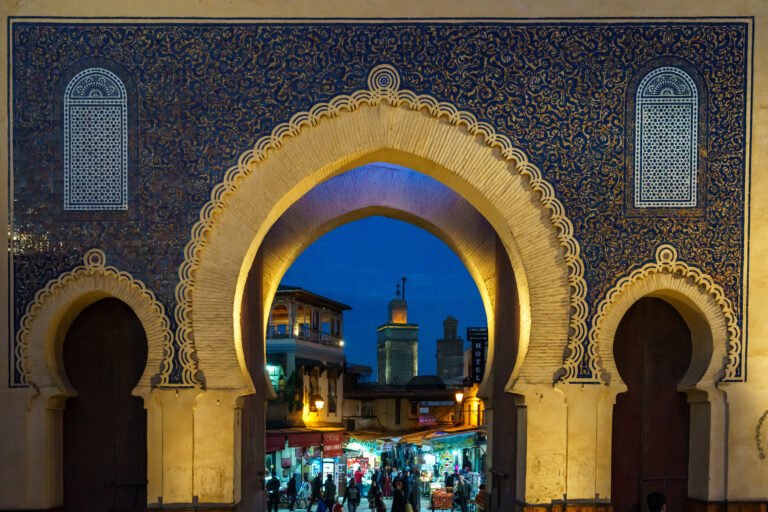
The Talaa Kebira starts at Bab Boujloud and runs down to the Karaouiyne quarter. You cannot lose it: it is the widest and busiest street, and it always descends. Allow two hours without stopping, half a day if you stop properly.
The first hundred metres
They pass the Bou Inania Madrasa on the right, and the 14th-century water clock on the left, almost opposite. Lower down the street narrows and the trades gather in stretches: food first, then fabrics, then babouches, then copper. This zoning by guild is the historic organisation of the souk, still readable today.
Neighbourhood ovens, Nejjarine, Seffarine
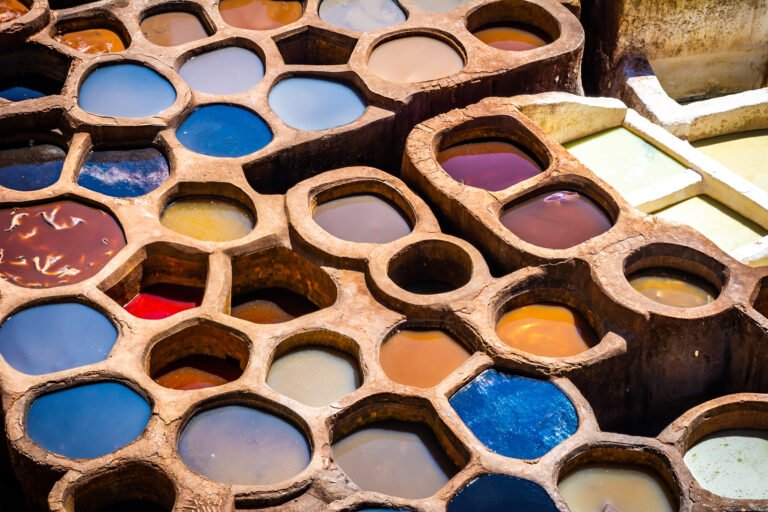
Halfway down, look for the neighbourhood ovens: the baker bakes bread that residents bring already shaped from home, each family marking its dough. A little further, the Nejjarine fountain and its fondouk, a former caravanserai now a museum of wood. Then Seffarine Square, where the coppersmiths hammer by hand — you hear it before you see it. A short detour leads to the Chouara tanneries.
The arrival, and how to get back
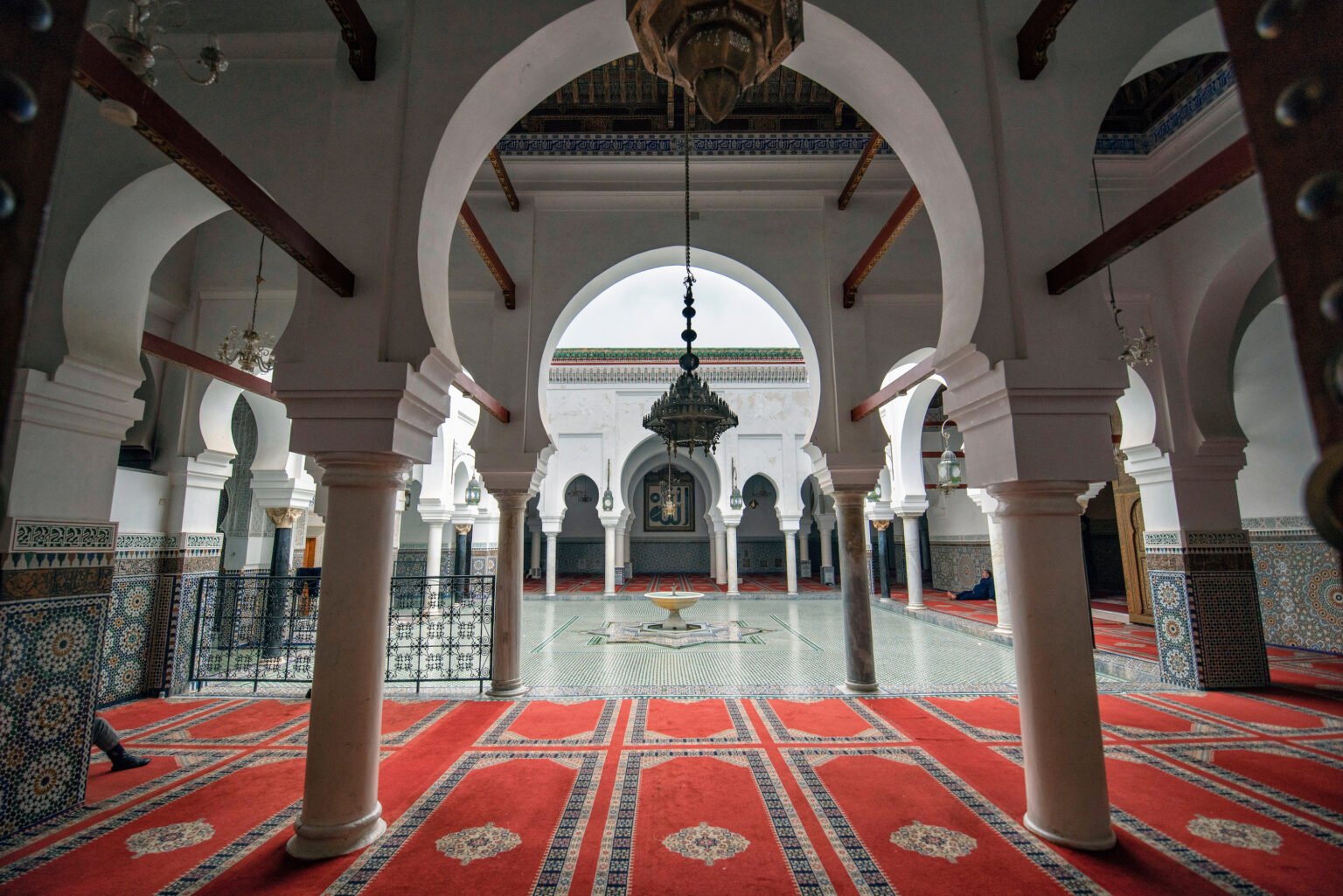
The route ends in front of the Karaouiyne mosque, whose entrance is reserved for Muslims but whose courtyard can be glimpsed from several doorways. Right beside it, the Attarine Madrasa can be visited and offers one of the finest courtyards in the city.
For the way back, two options: retrace your steps — longer than the descent, the slope is real — or take a taxi at Bab Rcif or Bab Jdid and return by road to the riad door, as explained in our article on arriving by car. We can also book an official guide in the language of your choice.