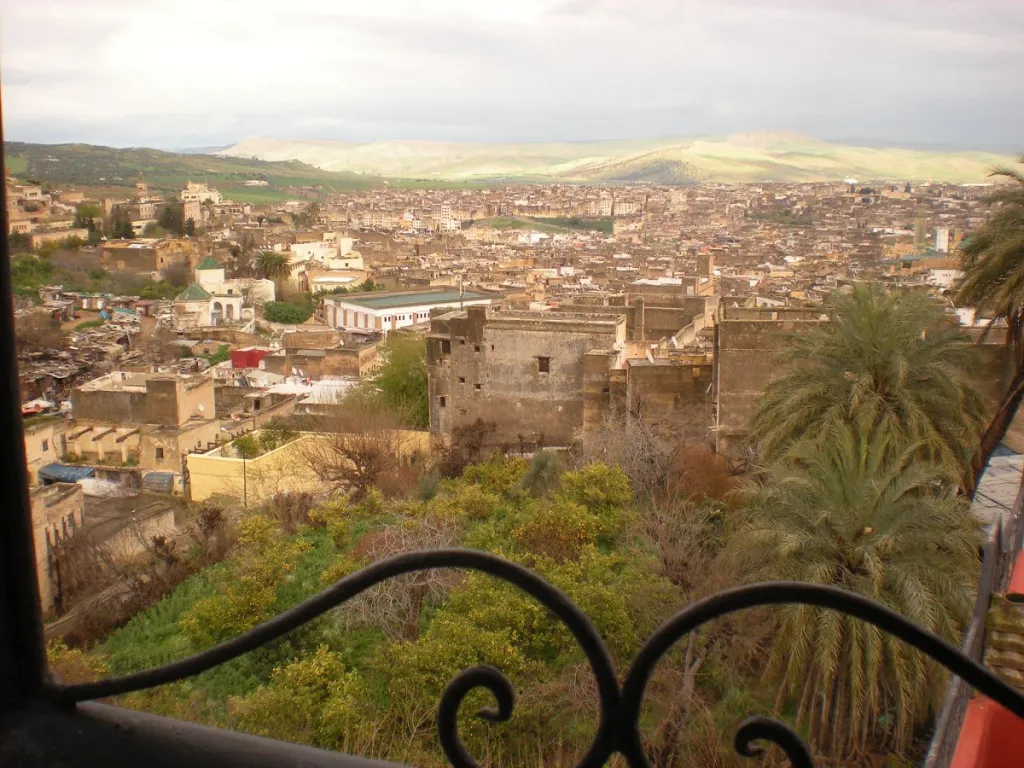
From the riad terrace the medina of Fez gives itself up in a single look: 360 degrees of rooftops, minarets and hills. It is the best place to understand the city before going down into it.
Why the medina is unreadable from above
Seen from above, Fes el-Bali has neither avenue nor monumental square. It is a dense carpet of white and ochre terraces, pierced by square courtyards and minarets. The medina has more than nine thousand lanes; not one can be guessed at from the roofs. That illegibility is normal: the city was designed for the pedestrian and the donkey, not for the overview. The map of the medina still helps, but it does not replace visual landmarks.
The four landmarks to identify
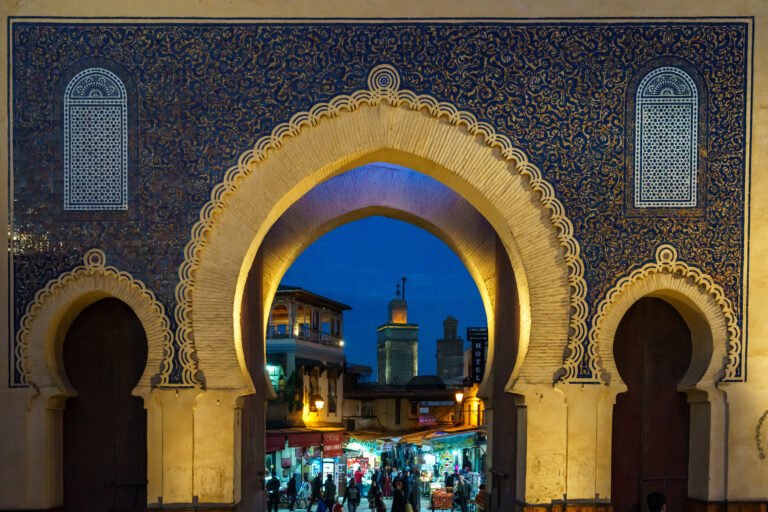
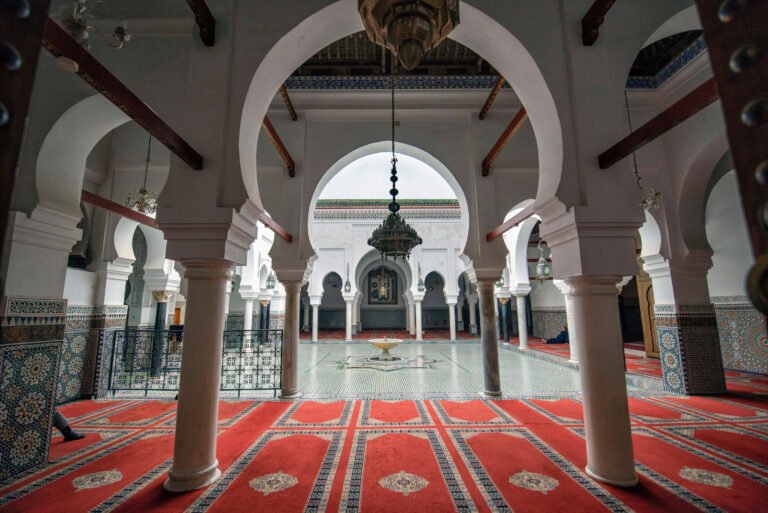
A few landmarks do stand out. The large green-tiled roof to the south-east belongs to the Karaouiyne mosque, founded in the 9th century and attached to the oldest university still in operation in the world. Nearer, the white silhouette of the Bou Inania minaret. To the north, on the hill, the ruined Merinid tombs; below them, the line of the ramparts and the gate of Bab Boujloud.
The best moment of the day
The terrace is also a listening post. Five times a day the call to prayer leaves one minaret, then another, then dozens at once, with a slight delay that travels around the city. The best moment is sunset: the light goes from ochre to pink, the swifts come down, and the sounds of the souk fade out over some twenty minutes.
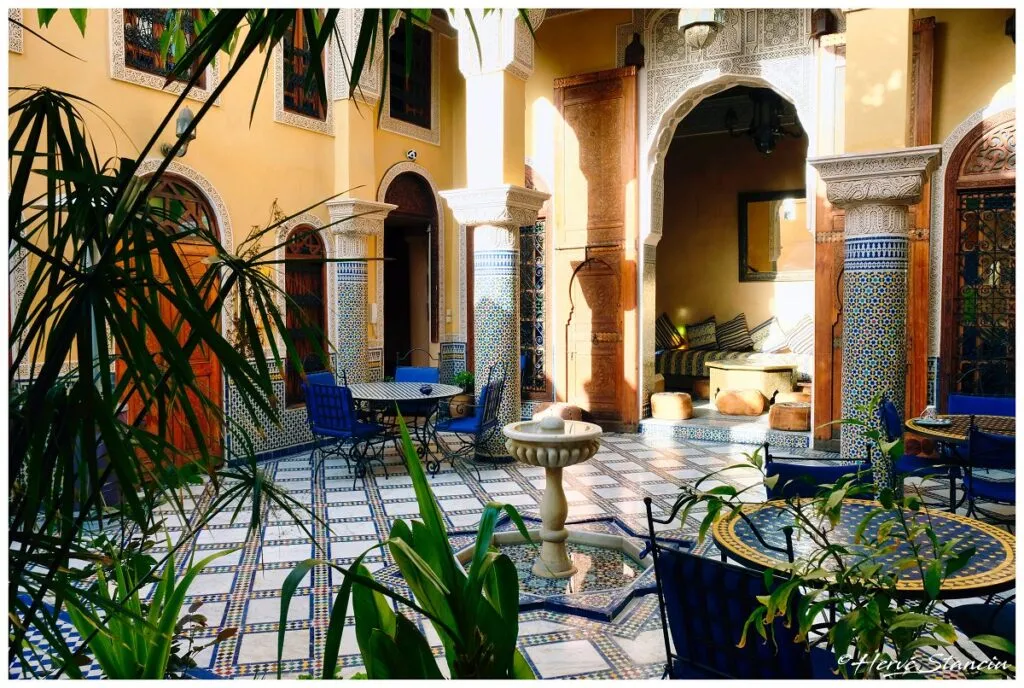
In practical terms: the terrace at Riad Layalina is freely accessible to all guests, at any hour. Breakfast can be served there on request. Bring a jumper in winter — at 400 metres of altitude, Fassi nights are cool from October to April.