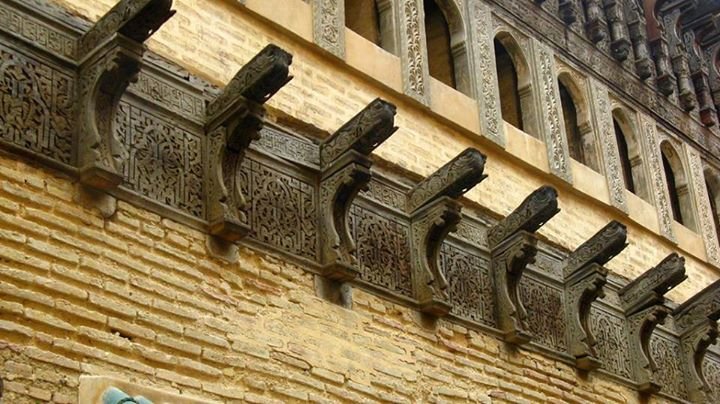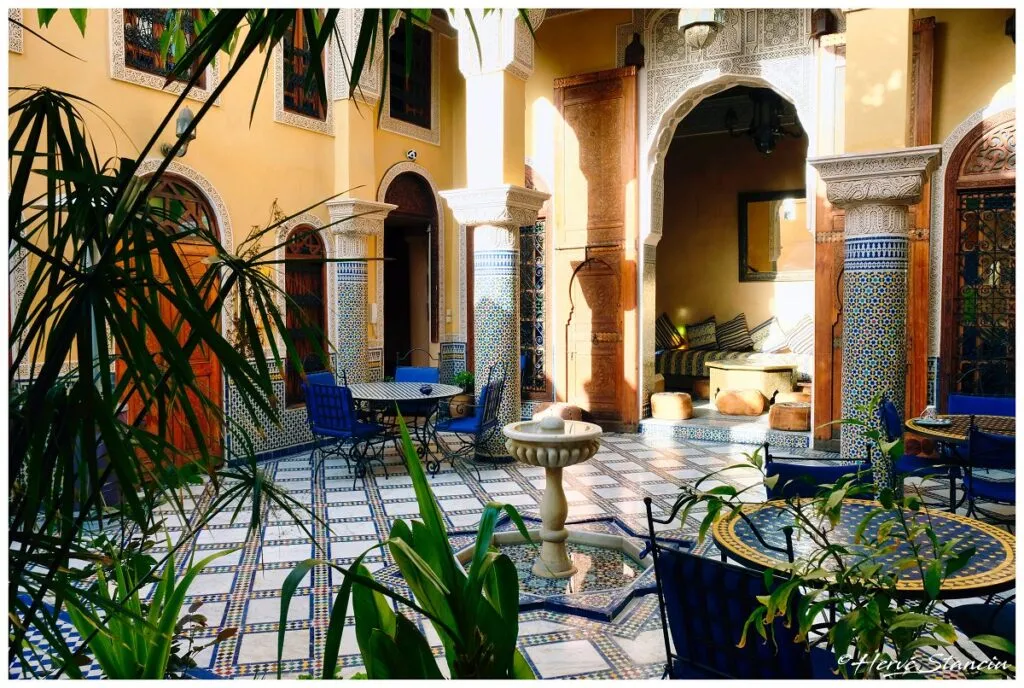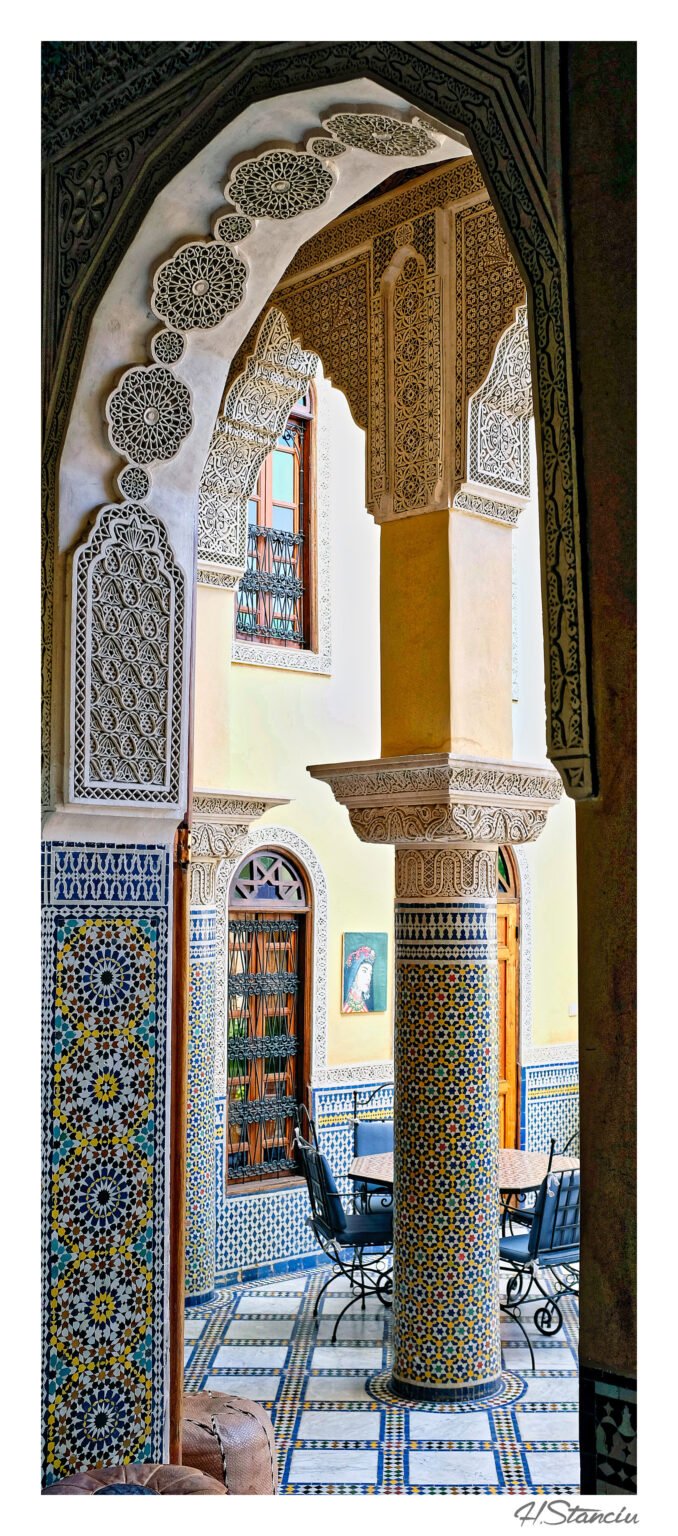
Three materials, three heights, three trades. Once you understand the division, you find it again throughout the medina.
Zellige, cut one tile at a time
At the bottom, zellige: glazed terracotta tiles, cut one by one with a hammer from square plates, then assembled face down on a bed of plaster. The patterns are not printed, they come out of the cutting. The maâlem — the master craftsman — works from memory, without a plan. In Fez, the local clay and the skill of the workshops have made the city’s zellige famous since the 14th century.
Stucco, carved before it dries
In the middle, stucco, known here as gebs. Plaster applied wet to the wall then carved before it sets, in geometric interlacing, foliate scrolls or Kufic calligraphy. The craftsman has only a few hours before the material hardens. The stucco stays white: it lets the walls breathe between the coloured zellige below and the dark wood above.
Cedar from the Middle Atlas
At the top, cedar wood — from the forests of Azrou, an hour’s drive away, which you cross at the start of the desert circuit. It is used for ceilings, doors and mashrabiya screens. Painted by hand with fine patterns, it is also chosen for its scent and its resistance to insects. The most worked ceilings in the riad are assembled without glue or screws.
A vocabulary that came from the madrasas
This vocabulary is not particular to private houses. It was born in the 14th-century Merinid madrasas, three hundred metres from the riad, and came down from religious architecture into domestic building. That is why a visit to the Bou Inania Madrasa, made after a night at the riad, reads far more easily. The photos of the riad show the detail of the three registers.